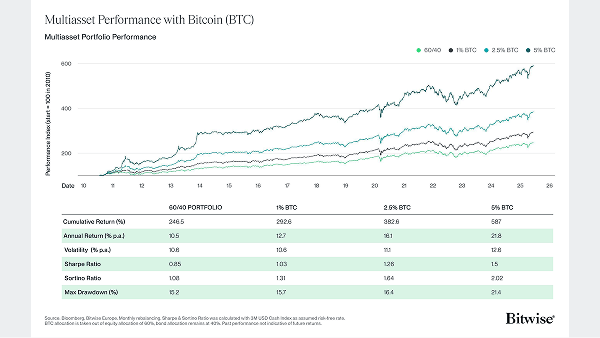

Digital Asset Treasuries (DATs) have emerged as a new corporate structure in the equity markets. They are publicly traded entities that raise capital with the explicit mandate to invest, hold, and, in some cases, actively manage their reserve assets. Traditional companies might accumulate Bitcoin or other crypto holdings as a complementary strategy to their primary operations, whereas DATs are purpose-built with the digital asset itself as the core of their business model.
The idea began with Strategy (MSTR, formerly known as MicroStrategy), which pioneered BTC balance sheet accumulation based on the thesis that Bitcoin provides a hedge against monetary debasement. Michael Saylor, the Founder and Executive Chairman's interest in Bitcoin came as a result of watching the Federal Reserve increase the US Dollar money supply. Today it is up ~43% since March 2020.
Strategy began with a simple approach: It would raise equity capital and buy bitcoin. Over time, however, its capital structure became more complex, introducing convertible debt, preferred equity, and other capital market innovations designed to help it raise capital cheaply to deploy into bitcoin. Other DATs have taken this strategy and deployed it to other assets.
DATs have had a transformative impact on bitcoin, with DAT purchases being a primary factor in bitcoin's strong performance versus other assets in the 2024 to early 2025 period. The emergence of ETH DATs also had the same effect, so we thought it was worth uncovering.
Here are some key stats as of 22/09/2025 per Dr Schellinger at Crypto Treasury Tracker:
- Market dominance: BTC (88.6%), ETH (9.4%), SOL (1.5%)
- Weekly inflows: BTC (+2,487), ETH (+91,660), SOL (+7.96M)
- Share of circulating supply: BTC (9.16%), ETH (4.34%), SOL (2.72%)
This Espresso focuses on the growth of Ethereum DATs, which are gaining traction, driving demand for ETH and reshaping supply dynamics. Can DATs do for ETH what they did for BTC? Could they be even more successful? This piece looks into the trend.
Demand outweighs Supply
A Structural Bid Continues
ETH DATs are absorbing more ETH than net new supply (issuance - burn) adds to circulation. For example, purchases in August equated to ~1.97M ETH, which dwarfed net new issuance of ~0.08M ETH, creating persistent demand pressure. This creates what we call a structural bid, where demand from DATs consistently exceeds supply dynamics. Over time, this dynamic reinforces ETH's scarcity and strengthens its position as a treasury asset.

ETH as a Yield-Bearing Treasury Asset
Proof of Stake assets redefine reserve return profiles
Bitcoin's capped supply and halving make it nearly impossible for treasury companies to
organically accrete more coins. This scarcity should force these DATs to raise capital at less favorable terms, therefore potentially diluting shareholders and reducing mNAV ratio (market capitalization / net asset value of reserve holding) to 1x over time. Unlike BTC, ETH's uncapped supply and network yield and DeFi strategies create a fundamentally different treasury asset and DAT return profile.
ETH DATs look more like operating businesses than BTC DATs, which simply buy and hold the asset. The income from staking and DeFi strategies enhances mNAV ratio because investors are pricing in future asset growth per share, without the necessary need for share dilution at opportune times. This feature is not possible with BTC DATs.
Hence, the ability to gain yield from staking or on-chain activity, beyond the underlying ETH balance, has proved to be attractive so far. Total ETH reserves held by DATs have surged to ~4.99M ETH, over 4.13% of circulating supply.
Ethereum's yield comes from three main sources:
- staking rewards
- transaction fees
- MEV (extra value from how transactions are ordered).
Staking rewards are earned for helping secure the network, while transaction fees include both base fees and extra payments from users who want their transactions processed faster. MEV represents additional revenue that validators can capture by arranging transactions in certain ways.

Growing Corporate Adoption
Increased Breadth and Depth of Holders
At the time of writing this report, the number of companies holding ETH reserves over 10 ETH (~$41.9k, as of writing) has steadily climbed to 68. This attests to breadth and depth of adoption for ETH as a treasury reserve asset. So far, the main dynamics are likely hype-related from the relative outperformance of ETH over the past six months. However, we still think this is likely to increase for a few reasons.
First, DATs are likely to become some of the largest “users” of the ecosystem. Maximizing the income generated from staking and other on-chain activity also maximizes the mNAV attributed to their equity, since yields will be higher relative to peers.
Staking not only produces revenue-it also provides DATs with influence over the protocol itself. This effect is most pronounced in on-chain governance systems such as Solana, but even in Ethereum, the largest DATs are likely to exert social pressure in off-chain governance debates.
Second, DATs serve as spokespersons to investors: Michael Saylor for Bitcoin and Tom Lee for Ethereum have both done tremendous jobs on shouldering career risk for investors and advancing the credibility of these assets on Wall Street and for institutions.
Finally, although more of a niche opportunity, DATs provide a new point of access for investors who might otherwise struggle to gain ecosystem exposure labs, foundations, or applications. By necessity, DATs must become large players and actively engage with these participants, making them a potential proxy for broader ecosystem involvement.

The Top ETH Treasuries
Diverse Strategies, One Asset
The top five ETH treasuries illustrate the diversity of strategies emerging among corporate holders. While the scale of reserves varies widely, each has distinct objectives and roles to play in the ecosystem:
- Bitmine Immersion Tech (BMNR, 2.42M ETH, ~2% of supply) allocates ~1% of its balance into investments that support the Ethereum ecosystem and create value for equity shareholders. For example, its $20M strategic investment into Eightco Holdings Inc. which is adopting a first-of-its-kind strategy to acquire Worldcoin (WLD) as its primary treasury asset. This marked the start of BMNR's approach to back bold ideas that strengthen Ethereum's vast ecosystem.
- SharpLink Gaming (SBET, 0.84M ETH) remains fully committed to its gaming and interactive betting business but noted their ETH treasury strategy is complementary to their core operations. SharpLink stakes 100% of balance.
- The Ether Machine (ETHM, 0.50M ETH) will operate as a dedicated Ethereum-native treasury through staking, restaking, and active participation in the broader ecosystem. It also provides validator infrastructure for enterprises and backs open-source research and tooling.
- Ethereum Foundation (0.25M ETH) is a non-profit organization based in Zug, Switzerland (“Crypto Valley”), whose mission is to support Ethereum protocol's growth while maintaining decentralization. The Foundation funds research, developer resources, and community collaboration, anchoring Ethereum's long-term sustainability.
- PulseChain Sac (PLS, 0.17M ETH) is an alternative Layer 1, which leverages its ETH reserves to bootstrap development of the PulseChain ecosystem, with emphasis on cross-chain activity and building complementary infrastructure.
- Other (1.12M ETH collectively) consists of the rest of the entities that own over 10 ETH. This long tail shows breadth, but not necessarily staying power. Many of these will face the “falling star” trajectory where enthusiasm fades and valuations compress.

Market Structure & Concentration
Sharks Dominate the Landscape
The distribution of DATs skews heavily toward “sharks” (1k–100k ETH) and “fish” (101–1k ETH), with relatively few “whales” and only one “mega whale” (BitMine). This depicts a future reality of a “winner takes most” outcome because raising capital at scale is easier for large, credible entities, while mid-sized DATs struggle to attract equivalent enthusiasm. We expect consolidation over time, with a small number of dominant players commanding most flows - much like what we've seen in BTC DATs.

Summary: ETH Treasuries Enter the Mainstream
Ethereum's evolution as a treasury asset is accelerating. DATs have transformed from a Bitcoin-centric play into a structural feature of the digital asset economy, now pulling ETH into balance sheets at scale. DATs are creating persistent demand that exceeds net new supply, reinforcing ETH's scarcity while layering on real yield from transaction fees and MEV.
Adoption is broadening. 68 entities now hold ETH reserves and the top five treasuries showcase diverse strategies ranging from corporate accumulation and staking, to foundations divesting for ecosystem growth. This diversification highlights Ethereum's dual role: both an economic reserve asset and a productive, yield-bearing instrument.
Yet the landscape is likely to consolidate in the future. Larger “mega whale” and “whale” DATs dominate flows, pointing toward a winner-takes-most future where credibility, scale, and governance influence compound over time. As this dynamic unfolds, Ethereum is carving out a unique position: not just a hedge or speculative play, but a programmable treasury asset that links corporate finance with on-chain economics.
In short: ETH treasuries are no longer a side story. They are becoming a structural pillar in crypto's capital markets.
Informations importantes
Communication à caractère promotionnel. Les informations contenues dans le présent Document sont fournies à des fins d’information et de pédagogie. Elles ne constituent ni un conseil en investissement, ni une recommandation personnalisée, ni une sollicitation en vue d’acheter ou de vendre un instrument financier.
Le présent Document (qui peut prendre la forme d’une présentation, d’un communiqué de presse, d’une publication sur les réseaux sociaux, d’un article de blog, d’une communication audiovisuelle ou d’un support similaire – ci-après le « Document ») est émis par Bitwise Europe GmbH (« BEU » ou l’« Émetteur »).
Bitwise Europe GmbH est constituée selon le droit allemand et agit en qualité d’émetteur des produits négociés en bourse (« Exchange Traded Products » ou « ETP ») mentionnés dans le présent Document. Les ETP sont émis sur la base d’un prospectus de base et de conditions définitives, susceptibles d’être complétés. Un prospectus a été publié ou, le cas échéant, sera publié conformément au Règlement (UE) 2017/1129. Les investisseurs peuvent obtenir gratuitement le prospectus de base, les conditions définitives applicables ainsi que tout supplément éventuel sur le site www.bitwiseinvestments.eu/fr
L’approbation d’un prospectus par l’autorité compétente ne constitue ni une approbation ni une recommandation des instruments financiers concernés.
Capital à risque. Les crypto-actifs sont des actifs hautement volatils et présentent un risque élevé. La valeur des investissements dans des crypto-actifs ou dans des ETP liés aux crypto-actifs peut fluctuer fortement à la hausse comme à la baisse et les investisseurs peuvent perdre tout ou partie de leur capital investi.
Les ETP liés aux crypto-actifs sont des instruments financiers complexes et peuvent ne pas convenir à tous les investisseurs. Ils peuvent exposer les investisseurs à des risques spécifiques, notamment un risque de crédit de l’émetteur, un risque de liquidité, des risques opérationnels ainsi que des risques liés au fonctionnement, à la réglementation et à la valorisation des marchés des crypto-actifs sous-jacents.
Aucun mécanisme de garantie du capital ne s’applique. Selon la juridiction et le mode de détention, les investisseurs peuvent ne bénéficier d’aucun mécanisme public d’indemnisation ou de protection des investisseurs.
Les performances passées ne constituent pas un indicateur fiable des performances futures. Toute déclaration prospective reflète des hypothèses et des anticipations et ne constitue pas une garantie de résultats futurs.
Avant toute décision d’investissement, les investisseurs doivent lire attentivement le prospectus de base, les conditions définitives applicables et notamment la section intitulée « Avertissements ». Une décision d’investissement doit tenir compte de la situation personnelle de l’investisseur, de ses objectifs, de son horizon d’investissement et de sa capacité à supporter des pertes potentielles. Le cas échéant, il convient de solliciter un conseil indépendant en matière financière, fiscale et juridique.
Un avertissement détaillé sur les risques applicables aux ETP liés aux crypto-actifs est disponible à l’adresse suivante : www.bitwiseinvestments.eu/fr/risk-warning