Guida al Staking con ETP
- I protocolli basati su meccanismi di consenso Proof of Stake consentono ai detentori di token di guadagnare ricompense sotto forma di token aggiuntivi (noto come “staking”).
- Anche gli investitori in ETP che replicano questi token possono guadagnare ricompense, progettate per accumularsi all’interno dell’ETP e migliorare i rendimenti complessivi nel tempo.
- Gli emittenti di ETP effettuano lo staking degli asset sottostanti tramite provider di staking istituzionali, mentre le chiavi private rimangono custodite presso il depositario regolamentato dell’ETP.
- Lo staking comporta rischi quali potenziali penalià di slashing, rischio di liquidità e rischio della piattaforma di staking, sebbene i provider istituzionali mirino a mitigarli. Una sezione dettagliata sui rischi è disponibile alla fine del presente documento.
Con l’evoluzione della tecnologia blockchain, si evolve anche il meccanismo di consenso. Nelle reti Proof of Stake come Ethereum, i partecipanti possono fare “staking” (bloccare) i propri token per validare le transazioni e proteggere la rete. In cambio, guadagnano ricompense. Coloro che effettuano lo staking operano come “validator” e sono responsabili della verifica delle transazioni e dell’aggiunta di nuovi “blocchi” (gruppi di transazioni) alla blockchain, un registro digitale permanente.
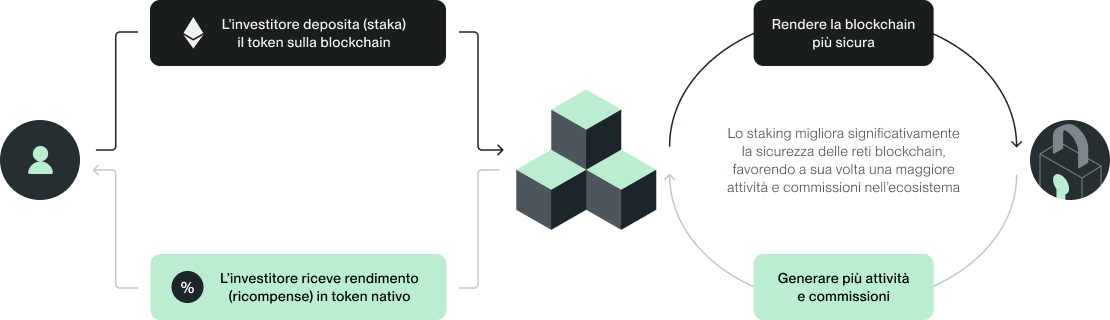
Lo staking è diventato una componente importante dell’ecosistema degli asset digitali, in quanto consente agli investitori di guadagnare rendimenti aggiuntivi supportando al contempo la rete. Viene spesso paragonato alla percezione di dividendi azionari, ma con una differenza fondamentale: i partecipanti devono contribuire attivamente al funzionamento della rete e un comportamento scorretto o disonesto può, in alcuni sistemi blockchain come Ethereum (ma non tutti, come Solana), comportare penalià note come “slashing”, con la perdita parziale o totale degli asset in staking.
Per gli investitori, lo staking può migliorare i rendimenti, ad esempio combinando guadagni in conto capitale con le ricompense dello staking, o contribuire ad attenuare le perdite in caso di calo dei prezzi. Le ricompense vengono tipicamente corrisposte nello stesso token, aumentando nel tempo le disponibilità dell’investitore, e possono essere reinvestite (“restaking”) per capitalizzare i rendimenti, in modo simile al reinvestimento dei dividendi nella finanza tradizionale.
Come funzionano gli Exchange Traded Products (ETP) con staking?
Gli ETP con staking sono progettati per offrire agli investitori che cercano esposizione all’andamento dei prezzi di un cripto-asset un accesso negoziato in borsa, nonché la possibilità di beneficiare di potenziali ricompense di staking che possono accumularsi all’interno dell’ETP.
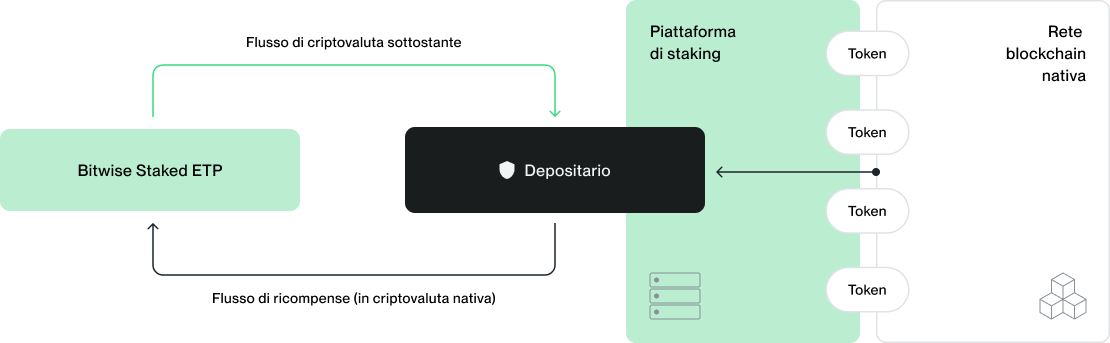
- L’emittente effettua lo “staking” degli asset sottostanti di specifici ETP su piattaforme selezionate gestite da provider di staking professionali di livello istituzionale. Le chiavi private rimangono sempre segregate e conservate in cold storage presso depositari regolamentati.
- Il provider di staking effettua lo staking degli asset per conto dell’ETP, che vengono utilizzati per proteggere la rete e generare rendimenti.
- Le ricompense di staking vengono reinvestite nell’ETP su base giornaliera, aumentando la performance dell’ETP incrementando il suo diritto di credito in criptovaluta sottostante.
Sebbene gli ETP con staking possano ridurre alcune complessità operative rispetto allo staking diretto, gli ETP su cripto-asset comportano rischi propri e potrebbero non essere adatti a tutti gli investitori. I rendimenti non sono garantiti.
Confronto tra ETP con e senza staking
Gli ETP con e senza staking differiscono principalmente per le modalità di generazione dei rendimenti, la struttura dei costi e l’esperienza dell’investitore.
Profilo di rendimento
Gli ETP con staking mirano a replicare la performance spot dell’asset cripto sottostante incorporando le ricompense di staking. Tali ricompense possono essere parzialmente o integralmente accumulate all’interno del prodotto, contribuendo a un rendimento totale superiore rispetto agli ETP senza staking, che riflettono solo la performance di prezzo. Nota: le ricompense di staking sono variabili e non garantite.
Considerazioni su costi ed efficienza
Gli emittenti di ETP con staking possono utilizzare le ricompense di staking per compensare i costi del prodotto o migliorare l’efficienza complessiva per gli investitori. Il costo totale di proprietà può quindi differire tra ETP con e senza staking. Gli investitori dovrebbero considerare sia le commissioni che la potenziale partecipazione alle ricompense quando confrontano i prodotti. Il TER, la struttura commissionale e la quota di ricompense trasmessa agli investitori sono tra i fattori divulgati dagli emittenti nella documentazione di prodotto.
Liquidità e accessibilità
Sia gli ETP con che senza staking sono tipicamente negoziati su mercati regolamentati e offrono liquidità giornaliera. Gli ETP con staking sono strutturati in modo che gli investitori non siano direttamente esposti alle complessità operative dello staking, come i periodi di lock-up o i requisiti tecnici. La negoziazione e il regolamento rimangono allineati alle pratiche standard dei mercati mobiliari.
I diversi tipi di ETP con staking
Gli ETP con staking condividono molte caratteristiche strutturali con altri prodotti negoziati in borsa. Le caratteristiche fondamentali come il TER, i depositari, la sede di quotazione e il quadro generale dell’ETP sono spesso comparabili tra i diversi emittenti. Tuttavia, possono differire in diversi aspetti operativi, in particolare nella proporzione degli ETH degli investitori messa in staking, nella quota di ricompense di staking distribuite agli investitori, nel tracking error e nei metodi di esecuzione.
Esistono tuttavia differenze tra i vari prodotti e gli investitori dovrebbero effettuare un’adeguata due diligence tra i provider per comprendere come vengono condivise le ricompense di staking.
Domande chiave:
- Quanta parte della ricompensa di staking va agli investitori e quanta all’emittente dell’ETP e/o al provider di staking?
- Le ricompense giornaliere guadagnate dagli investitori vengono divulgate dall’emittente dell’ETP?
- Le variazioni giornaliere del diritto di credito in criptovaluta vengono divulgate dall’emittente dell’ETP?
- Esistono altri rischi o costi nascosti?
Gli emittenti di ETP trattengono tipicamente una quota delle ricompense lorde di staking come commissione per il servizio di staking, utilizzata per coprire i costi operativi associati allo staking, tra cui i servizi di validator, la custodia, l’infrastruttura e la gestione continuativa del processo di staking.
Le ricompense di staking vengono generalmente accumulate su base continuativa e riflesse nell’ETP, tipicamente attraverso un aumento del diritto di credito in criptovaluta per unità nel tempo. Il tasso di staking effettivo è variabile e dipende da fattori quali le condizioni di rete, i meccanismi di ricompensa specifici del protocollo, le prestazioni dei validator e la dinamica generale del mercato.
Rischi degli ETP con staking
Le ricompense di staking non sono garantite e possono variare nel tempo. I risultati effettivi possono differire a causa delle regole del protocollo, della partecipazione dei validator, delle prestazioni della rete, della volatilità del mercato e della dinamica delle commissioni sulle transazioni. Lo staking comporta rischi, inclusa la potenziale perdita degli asset in staking e/o delle ricompense a seguito di eventi di slashing, penalià, vulnerabilità degli smart contract, rischi a livello di protocollo o guasti operativi. Gli investitori possono perdere parte o tutto il capitale investito.
Code di entrata e di uscita
Alcune blockchain dispongono di “code di uscita” che limitano la velocità con cui una determinata quantità di asset in staking può essere sbloccata dai validator. Ethereum, ad esempio, ha una coda dinamica che limita il numero di validator che possono entrare o uscire per epoch (~6,4 minuti). Un epoch è un periodo di tempo utilizzato dalla rete per organizzare l’attività dei validator. Se molti validator tentano di uscire contemporaneamente, si forma una coda e i tempi di prelievo possono estendersi a diverse settimane. I validator in attesa nella coda di uscita continuano a guadagnare ricompense di staking. Le ricompense cessano solo dopo l’uscita del validator, seguita da un ulteriore ritardo di prelievo di ~256 epoch (~27 ore) prima che l’ETH diventi prelevabile.
Per gli ETP con staking, ciò crea considerazioni sia di liquidità che di rendimento. Mentre i token digitali nella coda di uscita continuano a generare rendimento, non possono essere immediatamente riscattati. Per gestire ciò, molti emittenti di ETP mantengono un buffer di liquidità, lasciando una parte del token digitale non in staking in modo che i rimborsi degli investitori possano essere soddisfatti senza attendere il ciclo di sblocco completo.
Considerazioni sulla liquidità
Gli asset in staking possono generalmente essere prelevati; tuttavia, a seconda del protocollo sottostante, può applicarsi un periodo di sblocco o di attesa prima che gli asset siano pienamente accessibili. Tale periodo può variare dalla disponibilità immediata a diverse settimane, sebbene nella maggior parte dei casi non superi un mese.
Per garantire una liquidità continua e una negoziabilità senza interruzioni durante gli orari di negoziazione in borsa, gli emittenti e i gestori di ETP hanno sviluppato meccanismi proprietari di bridging della liquidità. Questi processi sono progettati per gestire efficacemente i requisiti di liquidità del prodotto, per supportare la negoziabilità sul mercato secondario in condizioni di mercato normali, sebbene la liquidità possa ridursi in periodi di significativa tensione del mercato. Parallelamente, le creazioni e i rimborsi nel mercato primario possono tipicamente essere eseguiti entro uno o due giorni lavorativi, senza esporre gli investitori al rischio di controparte.
Questi accordi di bridging della liquidità sono supportati da operatori consolidati dei mercati finanziari tradizionali, garantendo un quadro operativo solido e affidabile.
Rischio di slashing
Un errore nella conferma di una transazione o la violazione delle regole del protocollo può comportare una penalià denominata “slashing”, in cui vengono perse alcune ricompense di staking (o, in alcuni casi, gli asset originariamente messi in staking). Nonostante gli sforzi delle piattaforme di staking per evitare errori e penalià di slashing, tali problemi possono verificarsi a causa di aspetti operativi del processo di staking. Gli ETP con staking riducono spesso il rischio di slashing avvalendosi di piattaforme di staking istituzionali professionali il cui unico scopo è effettuare lo staking degli asset e gestire tali sfide operative.
Rischio della piattaforma di staking
Gli ETP con staking si avvalgono di provider di staking consolidati che cercano di mitigare il rischio di slashing attraverso misure quali assicurazioni di terze parti e bond on-chain. Tuttavia, possono esistere eccezioni in cui il rischio di slashing non è interamente coperto.
La dipendenza da una piattaforma di staking crea una dipendenza da una terza parte per una funzione fondamentale dell’ETP. Se un provider di staking subisce un guasto operativo, una violazione della sicurezza, l’insolvenza o è soggetto a provvedimenti regolamentari, gli asset in staking potrebbero essere temporaneamente inaccessibili, soggetti a ritardi nel recupero, o parzialmente o totalmente persi.
Volatilità di prezzo e di mercato
Il prezzo di mercato dei cripto-asset e degli ETP che li replicano può fluttuare in modo significativo e imprevedibile. Gli investitori sono esposti alle variazioni di prezzo dell’asset sottostante, che possono comportare perdite sostanziali, inclusa la perdita dell’intero capitale investito. I movimenti di mercato più ampi, inclusi eventi macroeconomici, cambiamenti nel sentiment del mercato e variazioni della liquidità di negoziazione, possono influenzare materialmente il valore dell’ETP indipendentemente dall’attività di staking o dall’accumulo di ricompense.
Liquidità del mercato secondario
La negoziabilità di un ETP con staking sul mercato secondario dipende dalla profondità del mercato, dai volumi di negoziazione disponibili e dalla presenza continua di market maker. In periodi di maggiore stress di mercato o di ridotta attività, gli spread denaro-lettera possono allargarsi e i volumi di negoziazione possono diminuire, compromettendo la capacità dell’investitore di eseguire transazioni ai prezzi attesi.
Rischio di custodia e informatico
Gli asset sottostanti di un ETP con staking sono detenuti da depositari regolamentati tramite accordi di custodia di livello istituzionale, incluso il cold storage. Nonostante queste misure di protezione, gli asset digitali possono essere esposti a minacce informatiche, tra cui attacchi hacker, compromissione dell’infrastruttura di custodia o perdite derivanti da guasti operativi nella catena di custodia.
Rischio normativo
I cripto-asset e i quadri normativi che li disciplinano sono soggetti a continui cambiamenti. Modifiche alle leggi, ai regolamenti o alle interpretazioni normative applicabili nelle giurisdizioni rilevanti possono influenzare la struttura, il funzionamento o il valore degli ETP con staking. Gli investitori devono essere consapevoli che il contesto normativo per i cripto-asset e gli ETP su cripto continua a evolversi e che futuri sviluppi normativi potrebbero avere un effetto negativo sul prodotto.
Conclusione
Gli ETP con staking forniscono accesso ai meccanismi di staking attraverso una struttura di investimento regolamentata e accessibile, offrendo esposizione alle ricompense di staking senza la complessità operativa della gestione diretta dei validator. Sebbene lo staking possa migliorare i rendimenti totali attraverso effetti di rendimento e reinvestimento, gli investitori devono rimanere consapevoli dei rischi operativi, di liquidità e correlati al protocollo. Con la continua espansione del segmento di staking nel più ampio mercato cripto, è probabile che svolga un ruolo sempre più rilevante nei framework di investimento in asset digitali.
Punti chiave
-
Anche gli investitori in ETP che replicano questi token possono guadagnare ricompense, progettate per accumularsi all’interno dell’ETP e migliorare i rendimenti complessivi nel tempo.
-
Gli emittenti di ETP effettuano lo staking degli asset sottostanti tramite provider di staking istituzionali, mentre le chiavi private rimangono custodite presso il depositario regolamentato dell’ETP.
-
Lo staking comporta rischi quali potenziali penalià di slashing, rischio di liquidità e rischio della piattaforma di staking, sebbene i provider istituzionali mirino a mitigarli. Una sezione dettagliata sui rischi è disponibile alla fine del presente documento.
I protocolli basati su meccanismi di consenso Proof of Stake consentono ai detentori di token di guadagnare ricompense sotto forma di token aggiuntivi (noto come “staking”).
Informazioni importanti:
Il presente documento ha scopo esclusivamente informativo ed educativo e non costituisce consulenza in materia di investimenti, una raccomandazione personalizzata né un’offerta o sollecitazione all’acquisto o alla vendita di strumenti finanziari.
Bitwise Europe GmbH, costituita ai sensi del diritto tedesco, è l’emittente degli Exchange Traded Products nell’ambito di un prospetto di base approvato dall’Autorità federale di vigilanza finanziaria tedesca (BaFin). L’approvazione del prospetto da parte della BaFin riguarda esclusivamente la completezza, la coerenza e la comprensibilità del prospetto e non costituisce un’approvazione, una raccomandazione o una valutazione dei meriti dei prodotti. Il prospetto di base e le condizioni definitive sono disponibili su bitwiseinvestments.eu/resources.
Tutti gli esempi numerici, le cifre di rendimento, le percentuali e i movimenti di prezzo utilizzati nel presente documento hanno carattere meramente illustrativo. Non rappresentano performance storiche effettive e non devono essere interpretati come un’indicazione o una garanzia di risultati futuri. I risultati effettivi possono variare significativamente.
Per ulteriori dettagli, si prega di consultare la dichiarazione di non responsabilità completa disponibile su: bitwiseinvestments.eu/disclaimer
Informazioni su Bitwise
Bitwise è uno dei principali gestori patrimoniali specializzati in criptoasset a livello globale. Dal 2017, Bitwise collabora con migliaia di consulenti finanziari, family office e investitori istituzionali in tutto il mondo per favorire la comprensione e l’accesso alle opportunità offerte dai criptoasset. La società vanta una consolidata esperienza nella gestione di un’ampia gamma di soluzioni delta-one, indicizzate e attive, tra cui ETP, ETF, mandati di gestione individuale, fondi privati e strategie hedge fund, negli Stati Uniti e in Europa.
Contatto
Informazioni generali
europe@bitwiseinvestments.com
Investitori istituzionali
clients@bitwiseinvestments.com
Richieste della stampa
europe@bitwiseinvestments.com
Potrebbe interessarti



Bitwise ti da il nostro benvenuto!
Seleziona la tua area geografica
Bitwise ti da il nostro benvenuto!
Conferma la tua area geografica, così da poterti mostrare contenuti rilevanti per te.
Bitwise ti da il nostro benvenuto!
Conferma la tua area geografica, così da poterti mostrare contenuti rilevanti per te.
Bitwise ti da il nostro benvenuto!
Conferma la tua area geografica, così da poterti mostrare contenuti rilevanti per te.
Switch to local website
We noticed you may be accessing this website from a different location than the one currently selected.
English
Paese
English
Paese
Questo sito web è gestito da Bitwise Europe GmbH (“Bitwise”, “noi”). Le informazioni contenute in questo sito sono destinate ai clienti retail del Regno Unito e ad altri visitatori nel Regno Unito. Se non ti trovi nel Regno Unito, le leggi e le normative locali possono essere diverse e i materiali qui presenti potrebbero non essere appropriati per te.
Tutti i contenuti sono forniti esclusivamente a scopo informativo generale. Non costituiscono consulenza in materia di investimenti, fiscale o legale, né un’offerta o una sollecitazione all’acquisto o alla vendita di alcun investimento e non devono essere utilizzati come base per decisioni di investimento. Dovresti valutare se un investimento è adatto alle tue circostanze e, se necessario, chiedere una consulenza professionale indipendente.
Le cripto-attività e i prodotti collegati alle cripto sono ad alto rischio. La FCA classifica le promozioni cripto per i clienti retail come “Restricted Mass Market Investments” (RMMI). Pertanto, alle comunicazioni destinate ai clienti retail si applicano requisiti aggiuntivi di evidenza, avvertenze sui rischi e sintesi dei rischi. Potresti perdere tutto il denaro investito.
Gli investimenti in cripto-attività o in molti prodotti collegati alle cripto generalmente non sono coperti dallo UK Financial Services Compensation Scheme (FSCS) o dal Financial Ombudsman Service (FOS). Non dovresti aspettarti di essere tutelato in caso di problemi.
L’accesso a determinate pagine, funzioni o transazioni può essere soggetto a classificazione della clientela e a valutazioni di appropriatezza richieste dalle regole FCA. Potremmo chiederti di completare controlli o dichiarazioni prima di poter procedere.
Quando questo sito web contiene una promozione finanziaria retail per cripto o altri RMMI, vedrai l’avvertenza sui rischi prescritta dalla FCA e un link (“Dedica 2 minuti per saperne di più”) al riepilogo dei rischi FCA presentato in un pop-up o in una pagina dedicata. Per comodità, puoi accedere a tale riepilogo in qualsiasi momento qui.
Se vengono mostrati dati di performance, la performance passata non è un indicatore affidabile dei risultati futuri. Qualsiasi proiezione, obiettivo o dichiarazione previsionale è intrinsecamente incerta e potrebbe non realizzarsi. Commissioni e spese riducono i rendimenti.
I rendimenti possono essere ridotti da commissioni, costi, spread e tasse. Il trattamento fiscale dipende dalle circostanze individuali e può cambiare. In caso di dubbi, richiedi una consulenza professionale.
Se viene fornito un prospetto (incluso un prospetto di base o supplementare) o un KID/PRIIPs KIID o equivalente, si tratta di un’informativa regolamentata, non di marketing. Questi documenti generalmente non rientrano nelle restrizioni UK relative alla promozione finanziaria.
In conformità con le regole FCA per gli investimenti ad alto rischio, non offriamo incentivi a investire (ad es. bonus “porta un amico”, vantaggi monetari/non monetari) in relazione a promozioni cripto retail.
I link esterni sono forniti esclusivamente per comodità. Non controlliamo e non siamo responsabili per i siti web di terze parti o per i loro contenuti. Prestiamo ragionevole attenzione per garantire l’accuratezza, ma non garantiamo la completezza, l’attualità o la disponibilità del sito web o dei suoi contenuti; le informazioni possono cambiare senza preavviso.
I nostri prodotti o servizi potrebbero non essere disponibili in tutte le giurisdizioni o per tutti gli investitori. L’accesso può essere limitato dalla legge. Sei responsabile di comprendere e rispettare le leggi e i regolamenti applicabili.
Per domande o reclami, contatta: clients@bitwiseinvestments.com | Ulteriori informazioni di contatto e legali sono disponibili nei nostri Termini di utilizzo del sito web e nell’Informativa sulla privacy.
Copyright e marchi
© 2025 Bitwise. Tutti i diritti riservati. I nomi dei prodotti, i loghi e i marchi sono di proprietà dei rispettivi
titolari.
The selected location is intended only for people resident in that country. If you are accessing from the UK, you should not use this version of the website or access the products and services shown here, as they are not available in your country and may not be suitable for you.
We recommend switching to your local version of our website to view information relevant to your jurisdiction.
Les produits d’investissement domiciliés en Europe et présentés sur ce site sont des Exchange Traded Commodities (« ETC »), instruments financiers considérés comme des titres de créances complexes par l'Autorité des Marchés Financiers, présentant des risques difficilement compréhensibles par le grand public. À ce titre, leur distribution en France répond à des règles spécifiques. Il relève de la responsabilité des intermédiaires et investisseurs professionnels souhaitant offrir des ETCs à leurs clients de s'assurer que leur distribution auxdits clients est réalisée dans le respect de la réglementation française.
Si prega di leggere attentamente questi termini prima di utilizzare questo sito web. Cliccando su "Accetta" e accedendo continuamente al sito web, si dichiara di aver letto, compreso e accettato questi Termini di Utilizzo del Sito Web.
La distribuzione delle informazioni e dei materiali su questo sito web può essere limitata dalla legge in alcuni paesi. Nessuna delle informazioni è rivolta a, o destinata alla distribuzione o all'uso da parte di, persone o entità in giurisdizioni (per nazionalità, luogo di residenza o sede legale) in cui la pubblicazione, distribuzione o uso di tali informazioni sarebbe contraria alla legge locale. Cliccando su "Accetta" e accedendo continuamente al sito web, si attesta di essere un investitore professionale o di essere altrimenti autorizzato ad accedere a questo sito web ai sensi di tutte le leggi applicabili.
È vietato utilizzare o tentare di utilizzare programmi automatizzati (inclusi, a titolo esemplificativo, spider o altri crawler) per accedere ai nostri sistemi o in relazione a questo sito web. Potremmo modificare questi Termini di Utilizzo del Sito Web di volta in volta. Eventuali modifiche saranno pubblicate su questo sito web. Continuando a utilizzare il sito web dopo tali modifiche, si accetta di essere vincolati da esse. Si prega di controllare frequentemente questa pagina per aggiornamenti o modifiche ai Termini.
Se ti trovi nel Regno Unito, negli Stati Uniti o in Canada:
Le informazioni presenti su questo sito non costituiscono pubblicità né sono destinate a sollecitare offerte pubbliche negli Stati Uniti o in Canada e non devono essere accessibili da persone fisiche o giuridiche statunitensi o canadesi.
Nessun consiglio
Nulla su questo sito web deve essere considerato come consiglio di investimento, legale o fiscale. Si consiglia a tutti gli investitori di consultare un consulente indipendente.
Limitazione di responsabilità
Bitwise e i suoi affiliati non sono responsabili per eventuali perdite o danni derivanti dall'uso di questo sito web.
Avvertenze sui rischi
- Le criptovalute e i prodotti legati alle criptovalute sono altamente volatili.
- Puoi perdere parte o l'intero importo del tuo investimento.
- I rischi legati agli investimenti sono numerosi e includono rischi di mercato, di prezzo, valutari, di liquidità, operativi, legali e normativi.
- I prodotti negoziati in borsa non offrono un reddito fisso né corrispondono esattamente alla performance della criptovaluta sottostante.
- Gli investimenti in criptovalute e prodotti collegati alle criptovalute sono adatti solo a investitori esperti. Dovresti richiedere una consulenza indipendente e consultarti con il tuo broker prima di investire.
Tutti gli investitori devono leggere il prospetto di base rilevante e i termini finali contenuti in questo sito web prima di investire e, in particolare, la sezione intitolata "Fattori di rischio" per ulteriori dettagli sui rischi associati a un investimento.
Generale
Il sito web è di proprietà e gestito da Bitwise Europe Management Ltd., una società registrata in Inghilterra e Galles con il numero 12165332 e sede legale presso 6th Floor, 60 Bishopsgate, Londra, Inghilterra, EC2N 4AW. È possibile contattarci via email all'indirizzo europe@bitwiseinvestments.com.
I riferimenti a "Bitwise", "noi", "ci" e "nostro" in questi Termini di Utilizzo del Sito Web si riferiscono a Bitwise Europe Management Ltd. e alle nostre affiliate.
Tutti i contenuti e il design di questo sito web sono di proprietà di Bitwise o dei nostri licenziatari e sono protetti da copyright e altre leggi applicabili. Qualsiasi copia del sito web o dei suoi contenuti richiede il previo consenso scritto di Bitwise.
Bitwise rispetta la privacy degli utenti. Si prega di consultare la nostra Informativa sulla Privacy per informazioni su come trattiamo i dati personali raccolti tramite il sito web.

